- Front Page
- Politica
- Local
- Internacional
- Deporte
- Analisis
- Investiga
- Live
- LenguahePapiamento

- Aruba Real Estate Summit a pone foco riba desaroyo responsabel den sector inmobiliario
- Trahadornan di Arubus ta exigi fecha y solucion concreto pa salario
- Dos detencion mas den investigacion di tiramento na Mandolinstraat
- AHATA ta promove medidanan pa proteha trahadonan contra calor intenso
- Hulanda lo studia preclearance Europeo pa biahe entre Aruba y Europa
- Aruba Real Estate Summit a pone foco riba desaroyo responsabel den sector inmobiliario
- Trahadornan di Arubus ta exigi fecha y solucion concreto pa salario
- Dos detencion mas den investigacion di tiramento na Mandolinstraat
- AHATA ta promove medidanan pa proteha trahadonan contra calor intenso
- Hulanda lo studia preclearance Europeo pa biahe entre Aruba y Europa
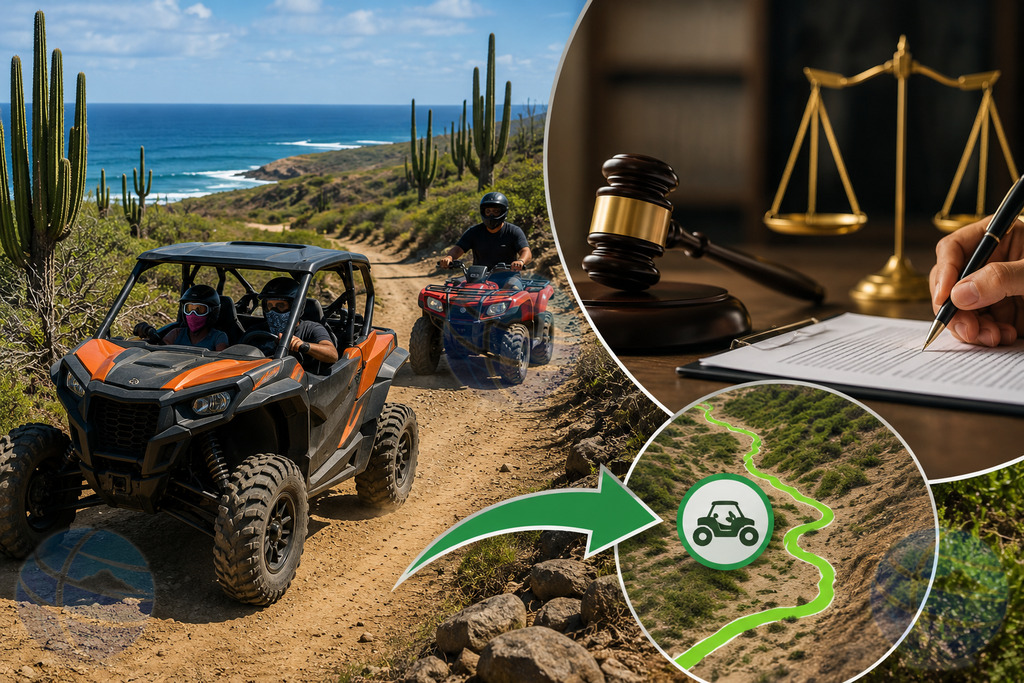
Croes: Specific UTV and ATV routes were already recommended, but legal changes are needed
ORANJESTAD – Designating specific routes for UTVs and ATVs in Aruba is not a new idea. Aruba Tourism Authority (ATA) CEO Ronella Croes confirmed to Noticiacla that recommendations in this direction already came out of a commission that addressed the issue years ago. However, legal changes are needed in order to control where these vehicles may operate and to implement certain technological measures.
WHY NOT HAVE ATA TAKE THE INITIATIVE FOR A NEW ROUTE?
During the interview with Noticiacla, Tito Laclé asked Croes why, since ATA is involved in the development and separation of trails for mountain biking and horseback riding, it does not also take the initiative to promote a special route for UTVs and ATVs in Aruba. Croes responded that the issue of UTVs and ATVs had already been analyzed in the past. “We sat on a commission to address the topic of UTVs and ATVs. We started meeting in that commission more than 10 years ago, and we have the recommendations that came out of it,” Croes said. According to her, one of the recommendations was specifically to designate routes for UTVs and ATVs.
EQUIPMENT TO TRACK ATVs AND UTVs
The discussion went beyond routes alone. Croes indicated that technology had also been considered that would allow the vehicles to be tracked and controlled when they enter prohibited areas. “You can track them in such a way that if they go onto a trail or into an area where they are not allowed, you can basically shut down the vehicle,” Croes explained. The ATA CEO made it clear, however, that a legal basis would be needed to put such a system into practice.
LEGAL CHANGES ARE NEEDED
“For the UTV and ATV aspect, this has to start with a change in legislation,” she said. The question arose in the context of ATA’s work to avoid conflicts between different uses of natural areas. Croes explained that ATA is, for example, working to give horseback riding its own route separate from mountain-bike trails and has already met several times with ranch operators to hear their views. Croes also noted that tourist awareness is an important part of the solution. ATA wants to strengthen communication with hotels, tour operators, rental car companies and other private-sector partners so they can better guide visitors before they take part in UTV, ATV, Jeep tours or similar activities. “We will give our private-sector partners more tools so they can better guide our guests,” Croes said. Croes’ response makes clear that although the creation of a special UTV and ATV route was not presented in the interview as a new ATA project, the concept itself already forms part of earlier recommendations, while implementation depends mainly on legislation and cooperation between the government, ATA and the private sector.