- Front Page
- Politica
- Local
- Internacional
- Deporte
- Analisis
- Investiga
- Live
- LenguahePapiamento

- Aruba Real Estate Summit a pone foco riba desaroyo responsabel den sector inmobiliario
- Trahadornan di Arubus ta exigi fecha y solucion concreto pa salario
- Dos detencion mas den investigacion di tiramento na Mandolinstraat
- AHATA ta promove medidanan pa proteha trahadonan contra calor intenso
- Hulanda lo studia preclearance Europeo pa biahe entre Aruba y Europa
- Aruba Real Estate Summit a pone foco riba desaroyo responsabel den sector inmobiliario
- Trahadornan di Arubus ta exigi fecha y solucion concreto pa salario
- Dos detencion mas den investigacion di tiramento na Mandolinstraat
- AHATA ta promove medidanan pa proteha trahadonan contra calor intenso
- Hulanda lo studia preclearance Europeo pa biahe entre Aruba y Europa
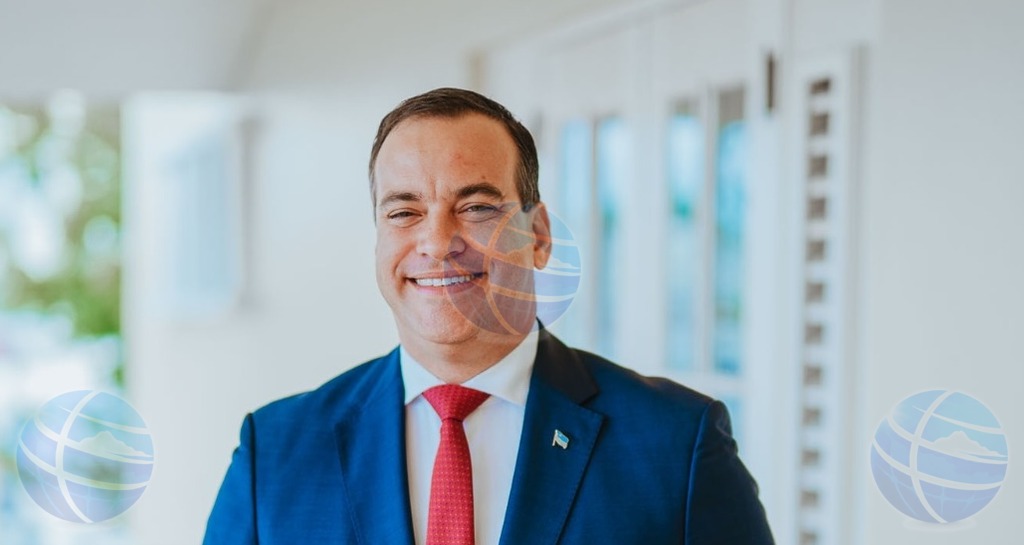
Wever to Laclé on Lagoon project: “This time I am convinced we will succeed”
ORANJESTAD – During a recent edition of Noticiacla LIVE, journalist Tito Laclé confronted Economy Minister Geoffrey Wever with a pointed question: why should the public believe that the redevelopment of the former Esso Lagoen gas station will actually happen this time, when a previous government had already announced a project for the same building and nothing ultimately materialized?
The question does not place responsibility for the earlier project on Wever, who was not part of Mike Eman’s previous Cabinet, but it does confront the current government with the history of a property that has already been presented before as a redevelopment opportunity.
Laclé asked Wever what is different this time and why Aruba should believe the current plan will go further than the previous one.
Wever acknowledged that he could not say exactly why the earlier project did not continue.
“We do not know exactly what may have happened that caused the project not to continue at that time. I understand there was a change in cooperation and other circumstances that may have influenced the decision, but I do not have a specific reason I can mention.”
When Laclé asked whether he truly believes the current project can be realized, Wever answered with confidence.
“Yes. I am completely convinced that it is a feasible project.”
According to the minister, the main difference is that the property is not being treated as an isolated project. The government is linking it to a broader redevelopment of the Columbusstraat and Wilhelminastraat area.
“This time we will renovate the entire Columbusstraat area, from the El Gaucho parking lot to around Circa Tanchu.”
Wever said the area has been neglected for too long and that the government wants to make it attractive again. He sees particular potential in Wilhelminastraat, where several restaurants already operate and where the former gas station could become part of a broader culinary development.
“The location is unique. It is a beautiful site, the building has historical value, and I am sure a project like this will contribute to the diversity and revitalization of downtown.”
Another element Wever considers different is the formal procedure to select a developer. According to the minister, the government is following the process required under the Didam ruling, which calls for public property to be offered transparently.
Interested parties have until September 18 to submit their proposals. A committee will then evaluate the bids, with the envelopes opened in the presence of a notary and the proposals scored.
“After that, a committee will evaluate all the proposals. The envelopes will be opened in the presence of a notary.”
According to Wever, the committee should present its recommendation approximately four weeks after the deadline, after which the government can proceed with granting the long-lease right.
Laclé continued to press the minister on timing and asked how quickly the project could realistically materialize.
Wever indicated that the formal process will take longer than the initial evaluation alone.
“Realistically, the formal granting of the long-lease right could possibly take place around the middle of next year.”
The exchange on Noticiacla LIVE focused attention on the central issue: this time there is a more formal process and a broader redevelopment plan, but the government still has to prove that the announcement will translate into execution.
After an earlier initiative for the same building failed to materialize, the challenge for the current government is not simply to present an attractive plan, but to show that this time the project will actually move beyond paper.