- Front Page
- Politica
- Local
- Internacional
- Deporte
- Analisis
- Investiga
- Live
- LenguahePapiamento

- Aruba Real Estate Summit a pone foco riba desaroyo responsabel den sector inmobiliario
- Trahadornan di Arubus ta exigi fecha y solucion concreto pa salario
- Dos detencion mas den investigacion di tiramento na Mandolinstraat
- AHATA ta promove medidanan pa proteha trahadonan contra calor intenso
- Hulanda lo studia preclearance Europeo pa biahe entre Aruba y Europa
- Aruba Real Estate Summit a pone foco riba desaroyo responsabel den sector inmobiliario
- Trahadornan di Arubus ta exigi fecha y solucion concreto pa salario
- Dos detencion mas den investigacion di tiramento na Mandolinstraat
- AHATA ta promove medidanan pa proteha trahadonan contra calor intenso
- Hulanda lo studia preclearance Europeo pa biahe entre Aruba y Europa
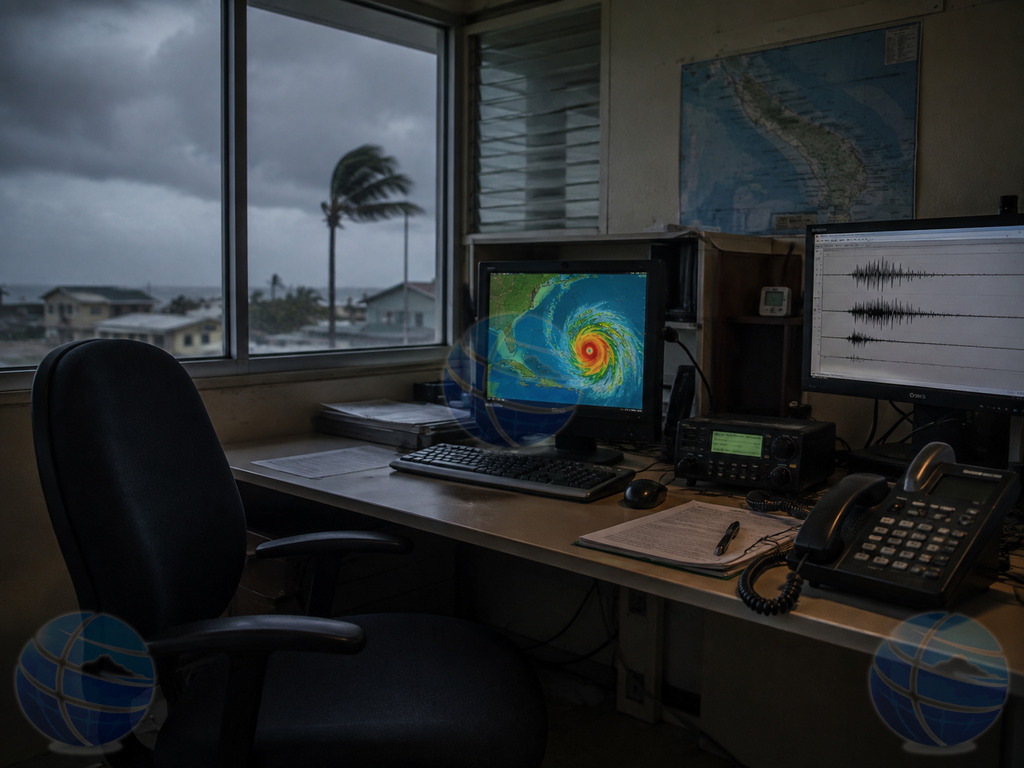
Meteo’s silence puts Aruba at risk during earthquakes and severe weather
ORANJESTAD – A lack of official information during a possible emergency can be just as dangerous as incorrect information. Meteo Aruba’s decision not to report earthquakes below magnitude 4 — and apparently to publish only those of magnitude 5 or higher — creates a dangerous information gap, especially in a country that depends on the same department for tsunami and severe-weather warnings.
This week, a Meteo Aruba meteorologist said in an interview with 24ora.com that, unlike other countries, Aruba follows a protocol under which earthquakes of magnitude 4 or lower are not reported.
IMMEDIATE QUESTION
That protocol raises an immediate question: what happens with earthquakes between magnitude 4.0 and 4.9? More importantly, why should magnitude be the only criterion? A shallow earthquake close to Aruba can be strongly felt even if its magnitude is below 4, while a magnitude 5 event that is deep and far away may have little or no effect on the island.
HOW OTHER COUNTRIES REPORT
Other countries do not treat every small earthquake as an emergency, but they also do not choose silence. Puerto Rico, for example, publishes information on events below magnitude 3, including location, depth, reported intensity and whether there is any tsunami risk. New Zealand also records and publishes small earthquakes, classifying the shaking as unnoticeable, weak, light or strong. This allows authorities to inform the public without creating panic.
THE DISTINCTION METEO ARUBA SHOULD MAKE
The distinction Meteo Aruba should make is between information and an alarm. Not every earthquake deserves an urgent alert, but a tremor felt in Aruba does deserve a brief official confirmation: where it occurred, its magnitude, whether there is any risk and whether the public needs to take action.
CONCERNING SILENCE
The current silence is even more concerning given the history of public criticism directed at Meteo Aruba. For years, the department has been accused of reacting late or downplaying weather systems that later turned out to be more serious. That does not mean every forecast was wrong, but it does show that public confidence is already fragile.
When a citizen feels the ground move and gets information faster from international sources or social media than from the local authority, rumors fill the gap. Part of the public becomes unnecessarily alarmed, while others lose trust and may eventually ignore a real warning.
Aruba is an island where practically the entire population and a large part of the infrastructure are concentrated near the coast. In addition, Meteo Aruba serves as the National Tsunami Warning Center. Its responsibility therefore goes far beyond simply publishing weather forecasts.
HURRICANE SEASON
Especially during hurricane season, Aruba should be able to rely on a service that informs early, explains uncertainty and provides updates at regular intervals. Saying that a system does not yet pose a danger but remains under observation does not create panic; it is responsible preparedness.
Meteo Aruba should publish its full protocols, clarify what happens with earthquakes between magnitude 4 and 5, and introduce different levels of communication: registration, information and alert. Not every event is an emergency, but no authority should leave the public in the dark when public safety is at stake.
The real danger is not only the earthquake or the tropical system. It is the moment when the public does not know what is happening, does not know whom to trust and has to depend on rumors to protect itself.