- Front Page
- Politica
- Local
- Internacional
- Deporte
- Analisis
- Investiga
- Live
- LenguahePapiamento

- AWSS ta alerta pa posibel molester di holor durante mantencion proximo
- Rene van der Plank (68) haya morto den cas na Morgenster
- Margaritaville ta cambia itinerario: crucero Islander lo yega Aruba dia 9 di September atardi
- Subfiscalnan na Aruba ta profundisa conocemento riba aresto, listramento y confisca
- Dos amigo ta gana $12.5 miyon na Canada y ta haci chansa cu nan ta bay Aruba
- AWSS ta alerta pa posibel molester di holor durante mantencion proximo
- Rene van der Plank (68) haya morto den cas na Morgenster
- Margaritaville ta cambia itinerario: crucero Islander lo yega Aruba dia 9 di September atardi
- Subfiscalnan na Aruba ta profundisa conocemento riba aresto, listramento y confisca
- Dos amigo ta gana $12.5 miyon na Canada y ta haci chansa cu nan ta bay Aruba
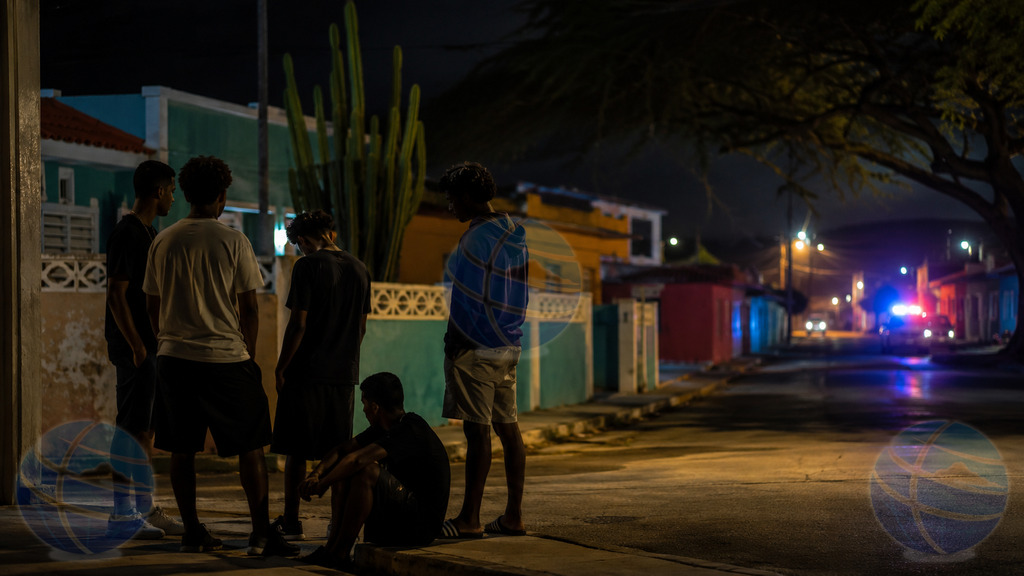
Beke Report: Aruba has 15 to 16 active youth gangs
ORANJESTAD – Aruba has between 15 and 16 youth groups, or gangs, that regularly appear on the radar of police, judicial authorities and social assistance organizations. These groups range from informal street groups to more structured criminal networks in which adults use teenagers between the ages of 14 and 18 to carry out tasks related to drugs, firearms, theft and violence.
This is one of the most alarming conclusions in the report De schaduwkant van Aruba, prepared by Bureau Beke at the request of the Public Prosecutor’s Office. The study is based on an analysis of official data and literature, neighborhood observations and 59 interviews and discussions with professionals working in justice, education, care and social organizations.
According to the researchers, the 15 to 16 groups are concentrated mainly in Pos Chiquito, Sabana Basora, Cayennastraat, Village, De Vuyst, Madiki, Dakota and Sero Patrishi. The report does not suggest that all children or young people living in these neighborhoods are involved in crime. Rather, it concerns relatively small groups that can nevertheless exert considerable influence over other young people in their surroundings.
Beke distinguishes three types of groups. There are informal street groups made up of young people from the same neighborhood or family who spend time together, smoke marijuana and occasionally commit minor offenses. Then there are the more problematic groups known as “Soldiers,” which share a common identity based on a name, color, symbol or neighborhood and are linked to fights, robberies and drug sales.
The most serious category consists of criminal networks in which adult leaders, generally between the ages of 20 and 40, use younger members as operatives. According to the report, these networks are active in drug and firearms trafficking, theft and violence.
Young people themselves do not necessarily refer to their groups as “gangs.” They use names such as Cayennastraat Soldiers, Village Soldiers or Pos Chiquito Crew. These groups identify strongly with their neighborhood and use colors, tattoos and hashtags on social media to show their affiliation.
A police analyst told the researchers that authorities avoid using the word “gang” because doing so could give the groups greater status. However, the Papiamento summary included in the report itself literally refers to “15-16 youth gangs.”
RECRUITMENT STARTS AT AGE 13 OR 14
One of the most concerning aspects is the age at which recruitment begins. According to Bureau Beke, children as young as 13 or 14 are drawn into these groups by older members.
At first, they are given relatively small tasks: acting as messengers, watching a location, transporting or selling drugs, or monitoring police movements. Later, some are used to commit robberies or other more serious crimes.
The report notes that adults may deliberately use minors because they expect a young person to receive a lighter punishment or avoid detention. This makes the child not only a suspect, but also a victim of criminal exploitation.
Family ties also play an important role. In some groups, fathers, uncles, brothers and cousins are part of the same network. The result is an intergenerational pattern in which criminality is passed from one generation to the next.
DRUGS, FIREARMS AND VIOLENCE
According to the professionals interviewed, the groups are linked to the sale of marijuana, cocaine and ecstasy; the possession and circulation of firearms; fights; robberies; car theft; intimidation; and conflicts between neighborhoods.
Social media increases both the visibility and intensity of the problem. Snapchat, Instagram and TikTok are used to threaten rivals, display firearms, build reputations and recruit new members. Fights are filmed and shared online like trophies.
Rivalries are mainly territorial. The report mentions conflicts between Village and Cayennastraat, Cayennastraat and Pos Chiquito, and Village and De Vuyst. A conflict that begins online or with an apparently minor argument can escalate into serious violence.
Beke notes that firearms, often originating from Venezuela, circulate within some of these groups. The combination of weapons, drugs and young people seeking to gain “respect” creates a particularly dangerous situation.
NO EXPLOSION, BUT A DANGEROUS CORE
The report does not conclude that Aruba is facing a general explosion in youth crime. Based on the data analyzed, it is more a relatively small but persistent group, mainly males between the ages of 14 and 23, involved in violence, drugs and criminal activity.
Nevertheless, the social impact is significant. On a small island, a limited number of individuals can cause considerable insecurity, conflict and harm across several neighborhoods.
The researchers link the problem to poverty, single-parent households, lack of supervision, school dropout, lack of after-school activities and limited opportunities in the labor market. For some young people who do not feel they belong at school, at work or in society, the street group offers identity, protection and status.
ARUBA KNOWS WHERE THE PROBLEM IS, BUT CONTINUITY IS LACKING
Bureau Beke concludes that the police, Public Prosecutor’s Office, Probation Service, Youth Protection, KIA and Veiligheidshuis are working under heavy pressure, with structural shortages of personnel, resources and funding.
The report recommends the creation of a Youth & Family Taskforce, periodic youth monitoring, greater capacity for care and guidance, and investment in education, employment opportunities, sports and safe after-school activities. Targeted enforcement against the most dangerous locations, groups and leaders should go hand in hand with prevention.
The question the government and judicial authorities must now answer is no longer whether Aruba has a problem. The report has already identified the groups, the neighborhoods, the recruitment methods and the risk factors.
The real question is: what concrete action has been taken since authorities received this information, and who bears responsibility for preventing the next 13-year-old child from becoming the next “soldier”?