- Front Page
- Politica
- Local
- Internacional
- Deporte
- Analisis
- Investiga
- Live
- LenguahePapiamento

- Aruba Real Estate Summit a pone foco riba desaroyo responsabel den sector inmobiliario
- Trahadornan di Arubus ta exigi fecha y solucion concreto pa salario
- Dos detencion mas den investigacion di tiramento na Mandolinstraat
- AHATA ta promove medidanan pa proteha trahadonan contra calor intenso
- Hulanda lo studia preclearance Europeo pa biahe entre Aruba y Europa
- Aruba Real Estate Summit a pone foco riba desaroyo responsabel den sector inmobiliario
- Trahadornan di Arubus ta exigi fecha y solucion concreto pa salario
- Dos detencion mas den investigacion di tiramento na Mandolinstraat
- AHATA ta promove medidanan pa proteha trahadonan contra calor intenso
- Hulanda lo studia preclearance Europeo pa biahe entre Aruba y Europa
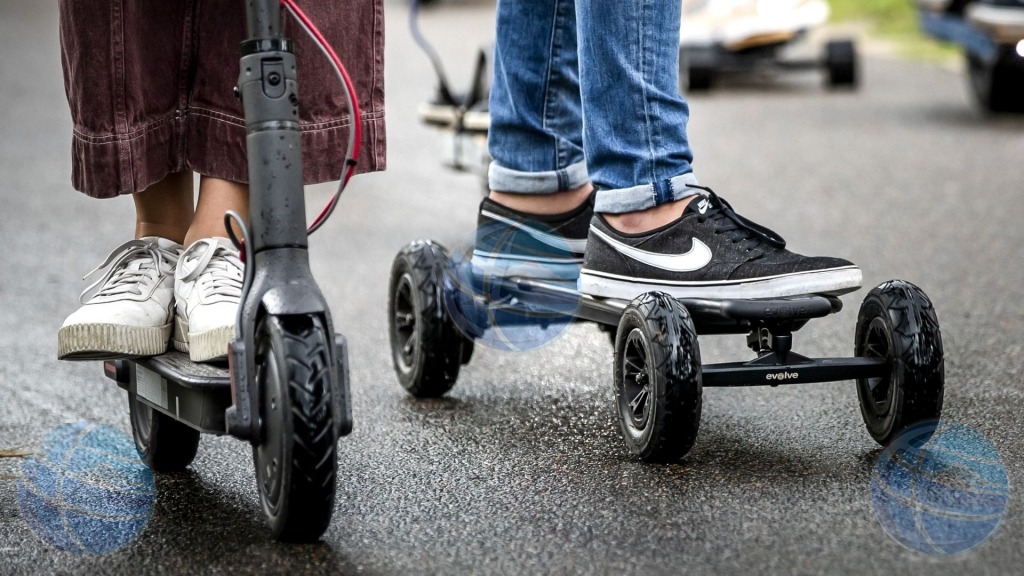
The Netherlands requires registration plates for e-scooters, Aruba maintains ban
ORANJESTAD / THE HAGUE – The Netherlands has introduced a new system requiring certain types of electric scooters (e-scooters) and other "special mopeds" to carry an official registration plate before they can legally use public roads. The measure also applies to vehicles such as Segways and BSO buses and is part of a broader effort to improve road safety.
Under the new rules, every newly approved e-scooter must receive a registration plate immediately at a cost of €18. Owners of existing approved vehicles will have one year to register them. However, the vast majority of e-scooters currently in circulation do not qualify because they have not been officially approved for use on public roads. As a result, they cannot obtain a registration plate and remain illegal to operate on public roads.
At present, only four e-scooter models have been officially approved in the Netherlands. All four are significantly larger than the compact scooters commonly seen in many other European cities. Approved models must comply with strict Dutch technical standards, while regulations in many other European countries are less restrictive. The Dutch government expects more approved models to become available in the coming years.
The development is also relevant for Aruba, where authorities are dealing with similar issues surrounding e-scooters. The Aruban government has prohibited their use on public roads, arguing that many pose a significant traffic safety risk and do not meet the island's legal and technical requirements. In addition, the courts recently confirmed that the government has the authority to act against the illegal use of e-scooters and electric bikes. The Ministry of Justice has emphasized that Aruba's approach follows an international trend seen in countries such as the Netherlands, Belgium, France, Spain and Germany.
While the Netherlands has chosen to regulate the market by allowing only officially approved e-scooters with registration plates, Aruba continues to maintain a stricter policy. On the island, e-scooters that do not comply with the law are not allowed on public roads, and authorities have stated they will continue enforcing the ban to safeguard public safety.