
- BCA ta alerta pa compania cu ta busca inversion den Aruba sin permiso legal
- Prensa di Ecuador ta reacciona duro: Corsou ta haci historia y La Tri ta keda contra muraya
- Medionan di Merca ta elogia actuacion historico di Eloy Room
- Rey Willem-Alexander a bishita seleccion di Corsou despues di wega contra Ecuador
- Abelardo de la Espriella a gana eleccion presidencial di Colombia
- BCA ta alerta pa compania cu ta busca inversion den Aruba sin permiso legal
- Prensa di Ecuador ta reacciona duro: Corsou ta haci historia y La Tri ta keda contra muraya
- Medionan di Merca ta elogia actuacion historico di Eloy Room
- Rey Willem-Alexander a bishita seleccion di Corsou despues di wega contra Ecuador
- Abelardo de la Espriella a gana eleccion presidencial di Colombia
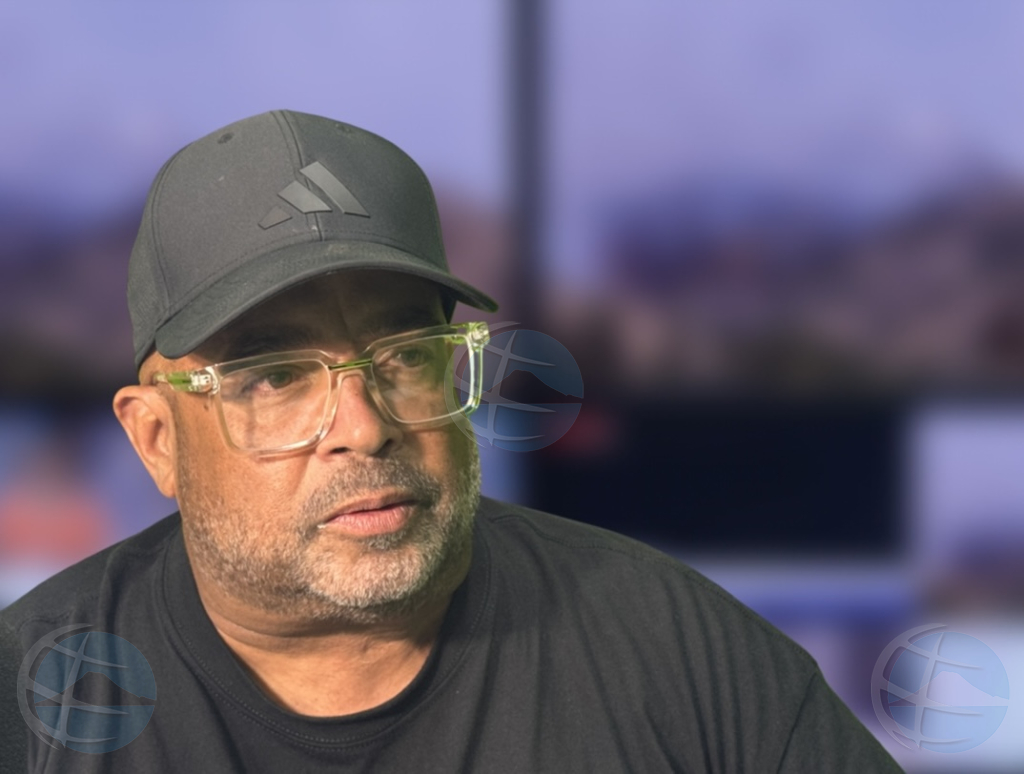
Errol de Freitas says HOFA could add to Aruba’s financial burden
ORANJESTAD — Errol de Freitas, president of the San Nicolas Business Association, expressed strong concerns about the proposed Kingdom law known as HOFA and its potential financial impact on Aruba, questioning whether the country is truly benefiting from its current fiscal direction.
Speaking Tuesday night with Tito Laclé on Noticiacla LIVE, Mr. de Freitas said Aruba is already carrying a heavy financial burden following the Covid-19 pandemic and warned that HOFA could increase the pressure on the country’s economy.
“Aruba did not ask the Netherlands for anything,” Mr. de Freitas said. “For many years, we managed to keep going on our own.”
Mr. de Freitas said Aruba is currently paying about 6.9 percent interest on its debt, a rate he described as difficult to sustain if the country continues taking on additional loans.
“We dug this hole ourselves,” he said. “It is not something that fell from the sky.”
According to Mr. de Freitas, the business community’s main concern is not only HOFA itself, but also what he described as a lack of information and clarity about the financial path the government wants to follow. He said neither Parliament nor the broader public has received enough detailed information about the risks, the impact or the government’s proposed exit strategy.
“No one knows exactly how the system will work or what the exit strategy is,” he said.
Mr. de Freitas also referred to a recent meeting at the Chamber of Commerce, where Finance Minister Geoffrey Wever presented information about HOFA. According to Mr. de Freitas, some of the information shared there had not yet been fully discussed in Parliament.
“The information we heard at the Chamber of Commerce is not what we heard in Parliament,” he said.
The SNBA president stressed that business organizations are not opposed to oversight or good governance, but want more transparency and stronger guarantees that Aruba will not lose further control over its financial future.
“We are not against good governance,” Mr. de Freitas said. “But we want to know where we are going and how Aruba will get out of this.”
He argued that Aruba has enough capacity and alternatives to continue managing its finances without further increasing its debt. He said the country should focus more on strengthening the local economy, tourism and sustainable development.
Mr. de Freitas also voiced frustration over the lack of concrete action in San Nicolas, despite years of political promises and public discussion about revitalizing the district.
“Everyone talks about San Nicolas, but very little real action has been taken,” he said.
He described Aruba as a blessed island built by a resilient and hardworking people, saying the local economy was created through the sacrifices of generations who developed tourism and other sectors.
By the end of the interview, Mr. de Freitas made clear that, in his view and that of several business groups, Aruba should think carefully before accepting HOFA in its current form.
“Things are OK the way they are now,” he said. “Let us continue managing our own situation.”