- Front Page
- Politica
- Local
- Internacional
- Deporte
- Analisis
- Investiga
- Live
- LenguahePapiamento

- AF&BA ta investiga falta di personal y capacidad turistico den sector F&B
- DVG ta registra aumento di griep y malesa respiratorio
- Tankinan historico di Kibaima lo bira centro pa Archivo Nacional
- Bureau Traimerdia celebra 30 aña di servicio na muchanan
- Apelacion no ta chens gratis: Caso Oduber y Sevinger ta manda señal fuerte
- AF&BA ta investiga falta di personal y capacidad turistico den sector F&B
- DVG ta registra aumento di griep y malesa respiratorio
- Tankinan historico di Kibaima lo bira centro pa Archivo Nacional
- Bureau Traimerdia celebra 30 aña di servicio na muchanan
- Apelacion no ta chens gratis: Caso Oduber y Sevinger ta manda señal fuerte
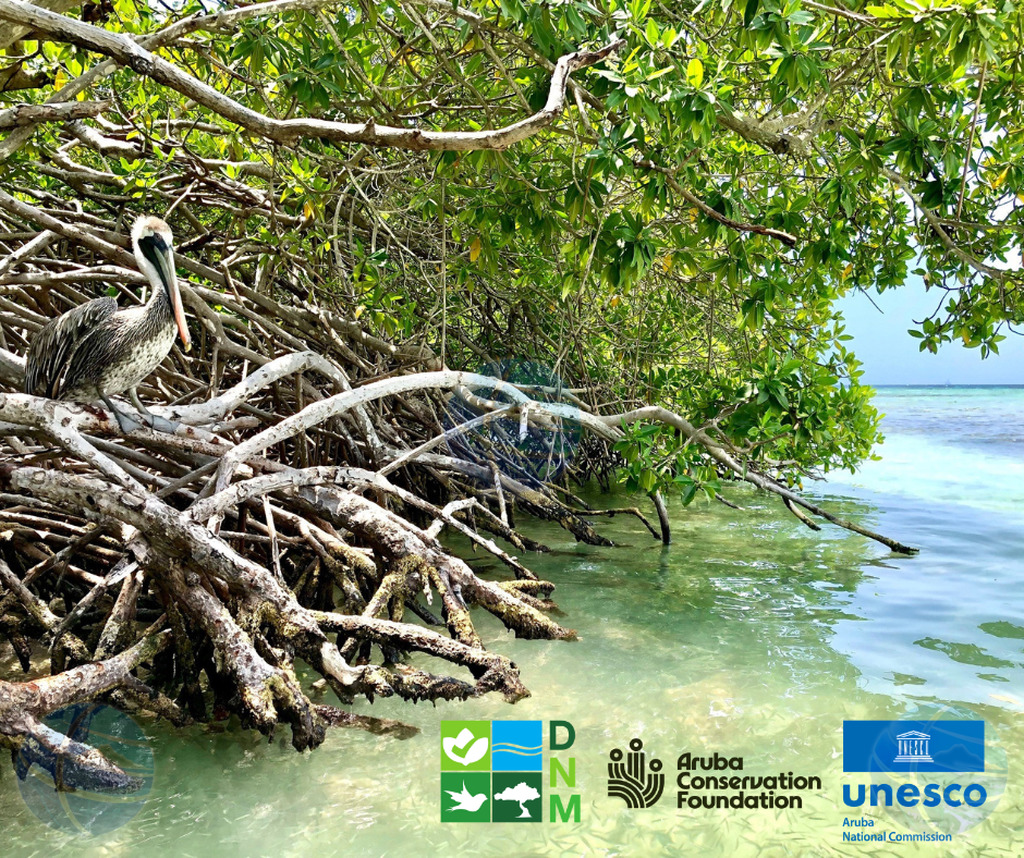
UNESCO status strengthens Aruba's commitment to protecting mangrove ecosystems
ORANJESTAD – Aruba's recent designation as a UNESCO Biosphere Reserve has reinforced the island's long-term commitment to protecting and restoring its mangrove ecosystems, officials said in observance of the International Day for the Conservation of the Mangrove Ecosystem.
The Department of Nature and Environment (DNM), UNESCO Aruba and the Aruba Conservation Foundation (ACF) said safeguarding mangroves is a shared responsibility involving government, environmental organisations and the wider community.
According to the organisations, mangroves, seagrass beds and coral reefs form an interconnected coastal system that protects Aruba from erosion, storms and water pollution while supporting marine biodiversity and strengthening resilience to climate change.
Officials stressed that UNESCO Biosphere Reserve status does not turn the island into a protected park or impose new legal restrictions. Instead, it recognises Aruba's commitment to balancing environmental conservation with cultural heritage, community well-being and sustainable economic development.
The government will establish a management committee to develop a long-term management plan in consultation with residents, researchers, NGOs and the private sector.
DNM, UNESCO Aruba and ACF are encouraging the public to learn more about the importance of mangroves and help preserve one of Aruba's most valuable natural ecosystems.