- Front Page
- Politica
- Local
- Internacional
- Deporte
- Analisis
- Live
- LenguahePapiamento

- FIU-Aruba ta alerta pa fraude cu trabou online
- Andruw Jones: Awe Cooperstown y Corsou ta uni pa semper’
- Fanaticonan di Corsou eligi como e mas amistoso di Mundial 2026
- Piscado salba despues di a cay den lama cerca di Valero
- Mas cu 100 ton di sushi colecta den prome oranan di accion nacional
- FIU-Aruba ta alerta pa fraude cu trabou online
- Andruw Jones: Awe Cooperstown y Corsou ta uni pa semper’
- Fanaticonan di Corsou eligi como e mas amistoso di Mundial 2026
- Piscado salba despues di a cay den lama cerca di Valero
- Mas cu 100 ton di sushi colecta den prome oranan di accion nacional
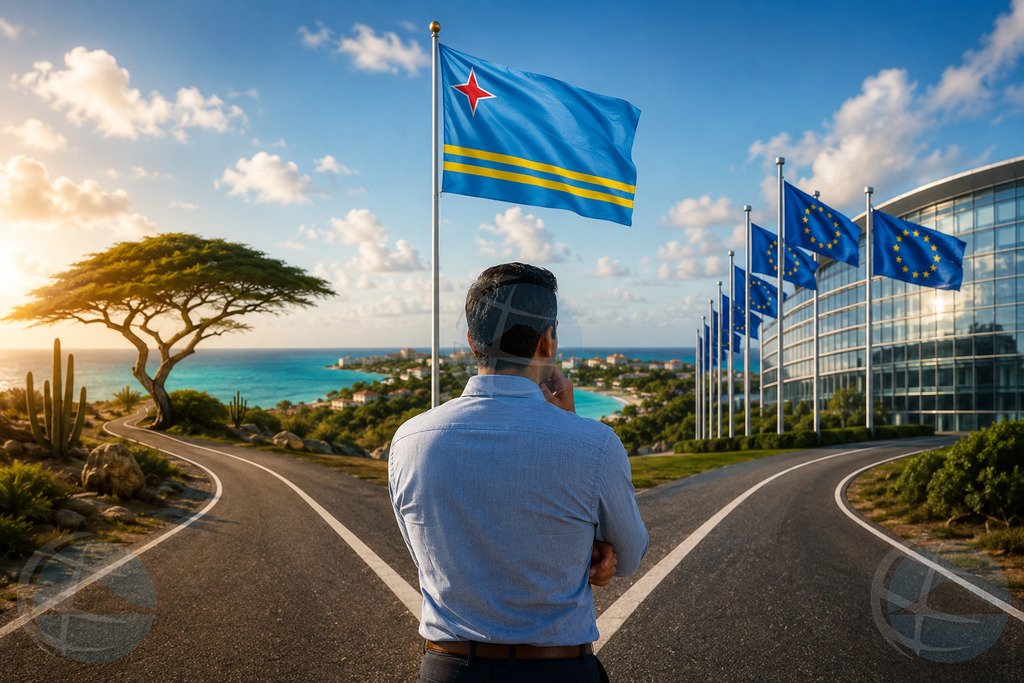
University report: Aruba must choose between greater autonomy or deeper European integration
ORANJESTAD – According to a new study on Aruba's future relationship with the European Union, conducted by the University of Curaçao, the central question is not merely financial but fundamentally political. The report, commissioned by the Dutch government, concludes that the choice between maintaining Aruba's current Overseas Countries and Territories (OCT) status or changing to Outermost Region (OR) status is a strategic decision that will shape the island's future direction. The study notes that becoming an Outermost Region would integrate Aruba much more closely into the European Union's legal framework. While this could provide greater economic opportunities and broader access to European funding and programs, it would also reduce local flexibility, as much of EU legislation would become mandatory. By contrast, retaining the current OCT status would allow Aruba to preserve greater autonomy in determining its own economic, social and cultural development, while maintaining more freedom in its relations with other countries.
The report concludes that the final decision should not be based solely on financial considerations but should also take into account the interests of the Aruban people, the government's administrative capacity and the island's long-term vision for the future.