- Front Page
- Politica
- Local
- Internacional
- Deporte
- Analisis
- Investiga
- Live
- LenguahePapiamento

- Wind Creek Aruba ta ahusta maneho di parkeer: Prome ora gratis
- Inflacion na Aruba ta subi te 3,7%; bestaansminimum ta yega Afl. 2.716
- Abogado ‘nobo’ tambe ta retira di caso di Chania Fernandez Pedra
- Ombudsman ta critica SVb atrobe: Pensionado ta perde tres aña di AOV
- Aruba 2050: Envehecemento y futuro laboral ta presenta desafio pa Aruba
JOIA Aruba by Iberostar unites stakeholders to protect Aruba’s environment (Part 1)
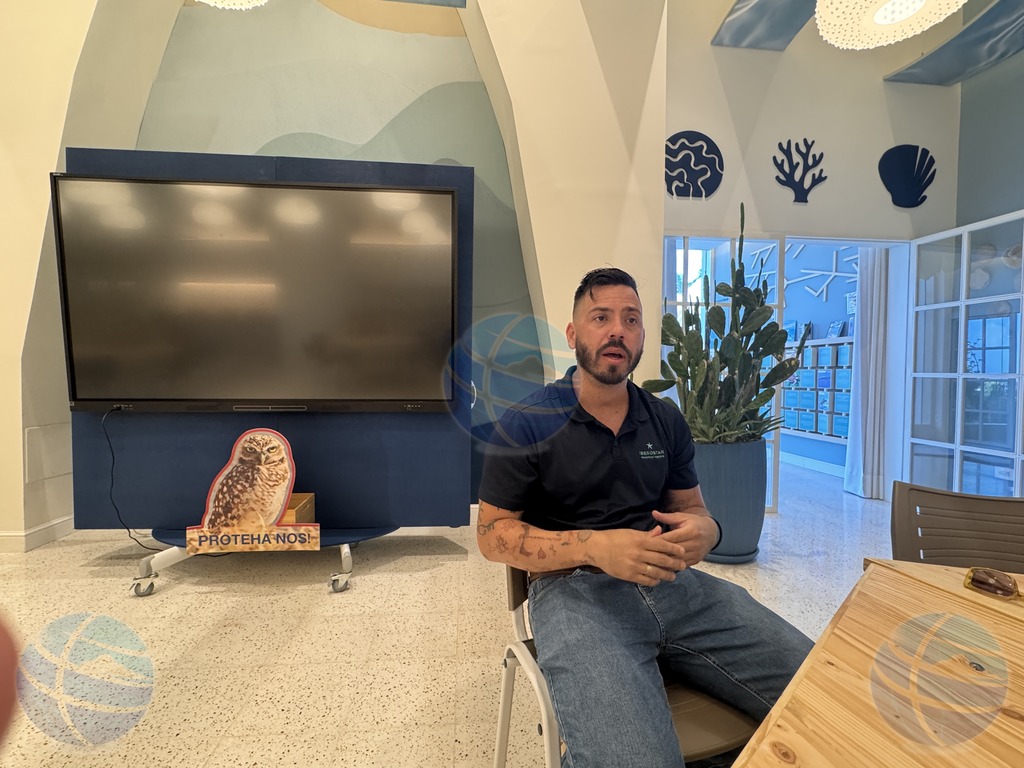
ORANJESTAD — Aruba's hotel sector can play a much greater role in protecting nature and addressing the island's environmental challenges. This is the vision of Jareth Vermeulen, Destination Stewardship Manager at JOIA Aruba by Iberostar, who explained during an exclusive interview with Noticiacla how the company is bringing together hotels, foundations, and environmental organizations to develop concrete projects, including the protection of the shoco, coral conservation, waste reduction, and environmental education. According to Vermeulen, the goal is to establish a collaborative system in which different companies and organizations can contribute to protecting Aruba. "I don't consider myself a leader, but rather a catalyst," Vermeulen explained, emphasizing that his objective is to encourage other hotels to participate as well.
1,200 HOTEL EMPLOYEES TRAINED TO PROTECT THE SHOCO
One of the most notable projects focuses on protecting the shoco, Aruba's national symbol, whose survival is under pressure. Vermeulen revealed that approximately 1,200 employees from various hotels, including Iberostar, Marriott, Boardwalk, and Bucuti, have participated in the Shoco Ambassador program. During the training, employees learn about the ecological importance of the shoco, its habitat, and how they can contribute to its protection. The initiative is part of a collaboration with Aruba Birdlife Conservation and other partners working to improve the bird's living conditions. According to Vermeulen, approximately 20% of Aruba's shoco population lives in the Tierra del Sol area, while another significant concentration is found in the San Nicolas area The project has contributed to the installation of 50 artificial nesting burrows, with another 150 available for installation through financial and material support from partners. The goal is to establish 500 artificial burrows by 2030. Vermeulen also emphasized that the project seeks a more permanent solution to connect different habitats, preventing shoco populations from becoming isolated and losing genetic diversity. An international scientific conference dedicated to the bird also contributed to the preparation of a national conservation plan, which has been presented to Aruba's Department of Nature and Environment.
EIGHT STAKEHOLDERS, INCLUDING HOTELS, JOIN FORCES TO REDUCE ORGANIC WASTE
Another initiative gaining momentum is a collaboration involving eight stakeholders, including hotels and Alto Vista Winery, to process organic waste. According to Vermeulen, approximately 70% of the waste identified by participating hotels in the project consists of organic material. Instead of sending all this waste through the conventional disposal system, hotels are separating food scraps, coffee grounds, eggshells, and other biodegradable materials. These materials are transported to Alto Vista Winery, where they are converted into compost.
JOIA ARUBA BY IBEROSTAR BEGAN SENDING ITS ORGANIC WASTE TO THE PROJECT APPROXIMATELY ONE MONTH AGO.
The initiative involves several stakeholders, including hotels, with the participation of the international company Sinba, which has experience in organic waste management. Vermeulen believes Aruba should expand this approach to other waste categories, including glass, plastic, and hazardous materials. The partners intend to organize a waste management conference in December to discuss how the collaboration can be expanded.