- Front Page
- Politica
- Local
- Internacional
- Deporte
- Analisis
- Investiga
- Live
- LenguahePapiamento

- Wind Creek Aruba ta ahusta maneho di parkeer: Prome ora gratis
- Inflacion na Aruba ta subi te 3,7%; bestaansminimum ta yega Afl. 2.716
- Abogado ‘nobo’ tambe ta retira di caso di Chania Fernandez Pedra
- Ombudsman ta critica SVb atrobe: Pensionado ta perde tres aña di AOV
- Aruba 2050: Envehecemento y futuro laboral ta presenta desafio pa Aruba
Tour operators seek mediation: “Regulate, but don’t close everything”
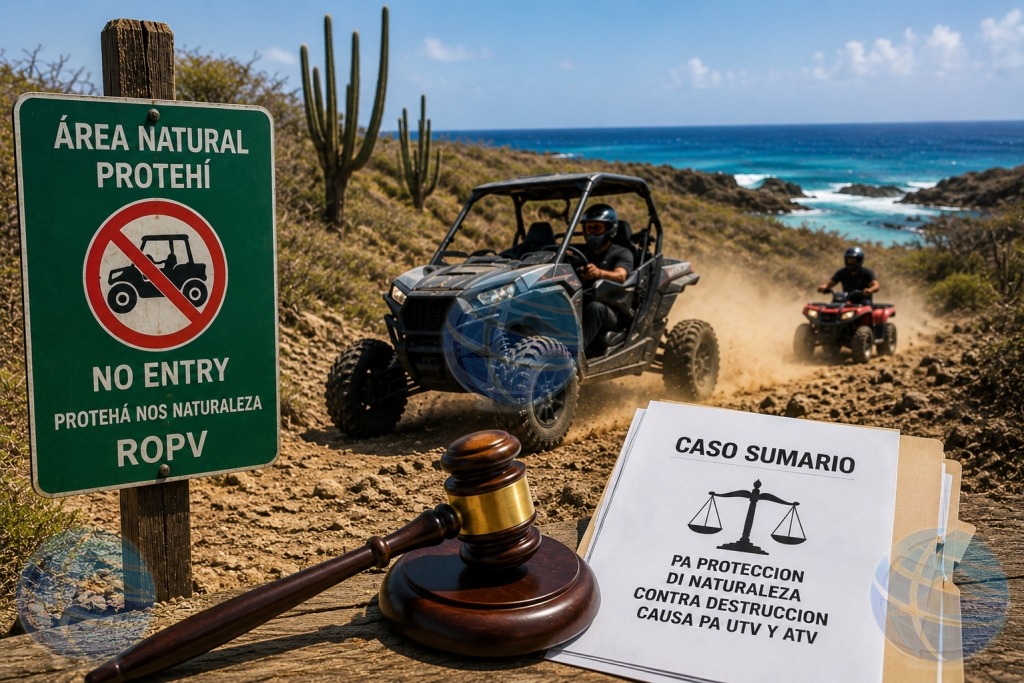
ORANJESTAD — The tour companies represented by lawyers Anthony Ruiz and Milaynie Reinkemeyer are seeking a solution that combines nature conservation with regulated tourism activities. During Thursday’s court hearing in the UTV and ATV case, they opposed an immediate blanket closure of the areas concerned and proposed mediation to reach an agreement.
The lawyers represented at least eight tour companies. According to Ruiz, other businesses in the sector share the same position: clear rules, designated routes and effective enforcement, rather than a ban that could threaten the continuity of their operations. “We are open to mediation,” Ruiz said, requesting an opportunity for the parties to seek a solution in a confidential setting.
Ruiz sees an opportunity for agreement
According to Ruiz, discussions over the past month have shown that there is room to regulate the sector. He also acknowledged Aruba Birdlife Conservation’s (ABC) contribution to the process.
“We have to be honest: full credit to Birdlife,” he said, noting that pressure to address the issue had contributed to the willingness to establish rules.
Ruiz mentioned mandatory routes, speed limits, limits on the number of UTVs and fines as possible elements of an agreement. He said tour operators are willing to accept oversight by a managing body, provided there are clear rules to enforce.
He argued that mediation could help overcome distrust between the parties. According to his account, tour operators asked ABC to identify, on site, where a route could run with the least possible impact, but that cooperation did not materialise.
Reinkemeyer: Closure could affect jobs and investment
In the arguments presented by Reinkemeyer, the companies emphasised that ABC’s demands could have lasting consequences for their operations, investments, contractual obligations and employees.
According to the defence, the companies concerned employ hundreds of people whose families depend on that income.
“The tour operators fully recognise the importance of nature conservation,” the lawyer said. However, they maintain that this recognition does not automatically justify a blanket, immediate and unconditional closure.
The defence argued that nature conservation, tourism, employment and business interests must be considered together. According to the lawyers, this does not mean economic interests should always take precedence over environmental protection.
Sector wants rules to tackle irresponsible activities
The companies argued that they themselves suffer from the lack of regulation. According to the defence, operators without the required permits, irresponsible behaviour and incidents involving users damage the reputation of the entire sector. “They have no interest in an unregulated situation continuing,” Reinkemeyer said.
The argument also stressed that environmental degradation undermines the foundation of their businesses: a damaged landscape loses its appeal as an excursion destination.
They therefore want a system with designated routes, conditions of use, supervision, enforcement and monitoring of environmental impacts.
Request for current data
The lawyers questioned whether the information presented by ABC is sufficient to justify a complete closure of all the areas mentioned.
They called for current, area-specific research into the presence of protected species, nesting locations, traffic intensity, erosion, dust and noise. They also questioned the geographical scope and currency of certain environmental classifications used in the proceedings.
According to the defence, it must first be established whether less restrictive measures — such as limits on operating hours, speed, vehicle numbers and access to specific routes — could provide sufficient protection.
These statements form part of the companies’ arguments; they are not findings by the court.
Objection to import restrictions
The defence also objected to the requested measures that could restrict the import and replacement of ATVs and UTVs.
According to the lawyers, this could directly affect the operations of the dealer and importer concerned, including outstanding orders, warranties and service obligations.
They argued that such restrictions go beyond protecting the specific areas and require their own justification regarding necessity and proportionality.
Judge leaves door open to mediation
Following Ruiz’s request, the judge indicated that, if the parties agree to enter mediation, they must inform the court no later than one week before the scheduled judgment date.
This does not mean mediation has already been agreed. The possibility depends on the parties’ willingness to participate.
The defence concluded by requesting the dismissal of ABC’s claims, maintaining that a regulated solution remains possible.
According to the lawyers, differences over route details and enforcement do not demonstrate that dialogue cannot work. Rather, further work is needed to reach an agreement that protects nature and allows responsible tourism.