- Front Page
- Politica
- Local
- Internacional
- Deporte
- Analisis
- Investiga
- Live
- LenguahePapiamento

- Parlamento a aproba mocion unanimemente pa pidi Hulanda claridad riba anotacionnan di Beatrix tocante Betico Croes
- ATIA ta lamenta e proceso di dialogo tocante salario minimo y e declaracionnan publico di e Prome Minister
- Eman ta nenga impasse den coalicion y ta insisti riba aumento di salario minimo
- Presidente di FIFA na Aruba pa inaugura proyecto di veld di futbol
- Fernandes Pedra a pidi cambio di huez: caso di dos morto atrobe suspendi
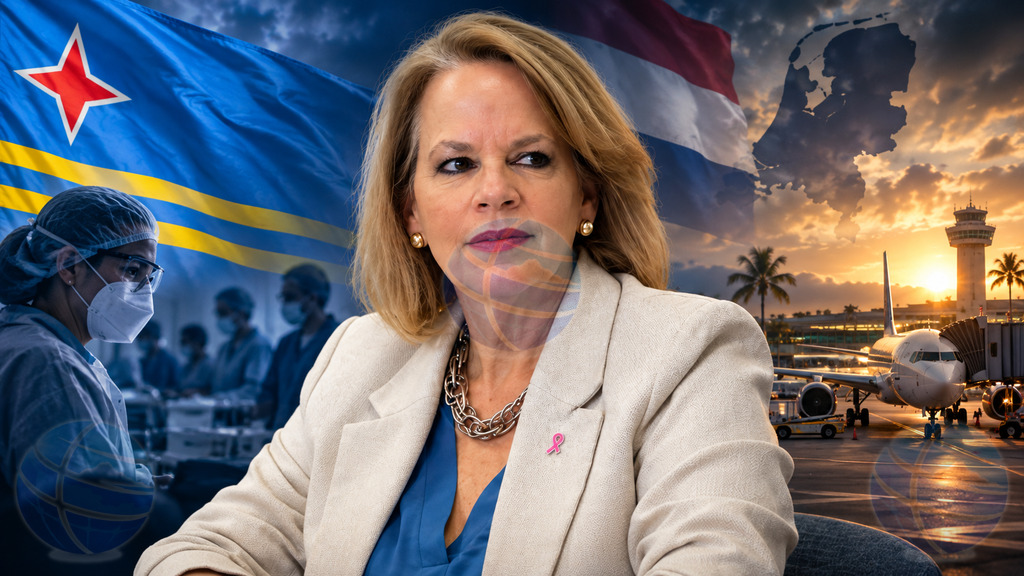
Wever-Croes: “The Netherlands did threaten us, but not over vaccination”
ORANJESTAD — “The Aruban government was put under tremendous pressure during that period, different kinds of pressure for different reasons.” With this statement, former Prime Minister Evelyn Wever-Croes confirmed to Noticiacla that the Aruban government did indeed face pressure from the Netherlands during the coronavirus pandemic. However, she makes an important distinction: she is not aware of any threat to suspend financial assistance over vaccination rates, but she does confirm a threat involving Dutch-funded healthcare personnel if Aruba proceeded with its plans to reopen its borders.
WEVER-CROES RESPONDS FOR THE FIRST TIME
Noticiacla approached Wever-Croes, who led Aruba's government during the COVID-19 crisis, after the Dutch government recently rejected allegations made by Horacio Oduber Hospital director Jacco Vroegop that the Netherlands had threatened to suspend financial support if Aruba failed to increase its vaccination rate.
VROEGOP ALLEGED PRESSURE FROM THE NETHERLANDS
On September 5, 2026, Noticiacla published an account from hospital director Jacco Vroegop, who stated that during an online meeting in December 2021, then-Dutch State Secretary for Public Health Paul Blokhuis warned that financial support for Aruba and Sint Maarten could be suspended if vaccination rates did not increase. The statement prompted questions in the Dutch House of Representatives, where parliamentarian Pepijn van Houwelingen (FvD) requested an official explanation from the Dutch government. On October 27, Dutch Minister Mirjam Sterk rejected the allegation. According to the minister, the Dutch government did not recognize the account presented by Vroegop and maintained that cooperation with Aruba during the pandemic had been constructive, both with the authorities and healthcare professionals. The Netherlands was also unable to identify the specific meeting to which Vroegop was referring.
“WE WERE NEVER THREATENED OVER VACCINATION RATES”
In her direct response to Noticiacla, Wever-Croes confirmed that the Aruban government faced various forms of pressure during the pandemic. “Some were logical and understandable, while others were completely illogical and incomprehensible,” the former prime minister stated. However, regarding Vroegop's specific allegation, Wever-Croes was unequivocal. “As far as the alleged threat concerning vaccination is concerned, I am not aware of such a threat. We were never threatened by the Netherlands with the suspension of assistance during the pandemic if we failed to achieve a certain vaccination rate.” According to Wever-Croes, former minister Dangui Oduber also confirmed that he had not received any such threat. “So neither Dangui nor I were ever threatened over this.” Nevertheless, the former prime minister does not rule out the possibility that Vroegop may have received a different message during a meeting in which the Aruban government was not represented. “I do not know whether what Mr. Vroegop describes may have been said during a meeting between the hospital and the Netherlands, at which the government itself was not present.” Wever-Croes did confirm that achieving a high vaccination rate was extremely important to the Netherlands.
“THEY THREATENED US WHEN WE ANNOUNCED OUR EXIT STRATEGY”
Wever-Croes's most significant revelation concerns another moment during the pandemic: the Aruban government's decision to begin reopening its borders as part of its strategy to emerge from the crisis. According to the former prime minister, the Netherlands opposed Aruba's plan and exerted direct pressure on the government. “What they did threaten us over was when we announced our exit strategy. They did not want us to reopen our borders, and they threatened that if things went wrong, they would withdraw the healthcare personnel they were subsidizing for us.” This constitutes a specific allegation by the former prime minister: according to her account, the Netherlands made continued support for healthcare personnel conditional on the consequences of Aruba's decision to reopen its borders. Wever-Croes emphasized that despite the warning, the Aruban government did not reverse its decision. “But we were confident in our plan, so we proceeded with our plan to reopen the borders.”
TWO DIFFERENT THREATS
Wever-Croes's statement introduces an important distinction into the controversy. While Vroegop maintains that the Netherlands threatened to suspend financial assistance if vaccination rates did not increase, Wever-Croes says she has no knowledge of such a threat being directed at the Aruban government. At the same time, however, she reveals that the government did receive a warning about the possible withdrawal of Dutch-funded healthcare personnel if the reopening of the borders led to problems. The two accounts do not necessarily contradict each other, as they concern different circumstances. However, Wever-Croes's account does not substantiate Vroegop's specific allegation either.
QUESTIONS REMAIN UNANSWERED
Wever-Croes's response adds another dimension to the debate over Dutch pressure during the pandemic. While the Dutch government has rejected the allegation concerning vaccination, the former Aruban prime minister's statement raises additional questions: Who exactly communicated the warning about healthcare personnel, when did it happen, and was the threat officially documented? It also remains to be established whether the meeting mentioned by Vroegop was a separate exchange between Dutch authorities and hospital representatives, without the participation of the Aruban government.
The central point of Wever-Croes's response is clear: she does not confirm the allegation of a vaccination-related threat, but she does maintain that the Netherlands threatened the Aruban government over another crucial issue during the pandemic. Her statement raises a new question: To what extent was cooperation between the Netherlands and Aruba during the health crisis accompanied by political and financial pressure, and where was the line between cooperation and making assistance conditional? Wever-Croes's account is firsthand testimony from the person who led Aruba's government during the pandemic. Her allegation concerning the possible withdrawal of healthcare personnel still requires clarification from the Netherlands.